
The Best Stage You’re Not On: Why Podcast PR Works
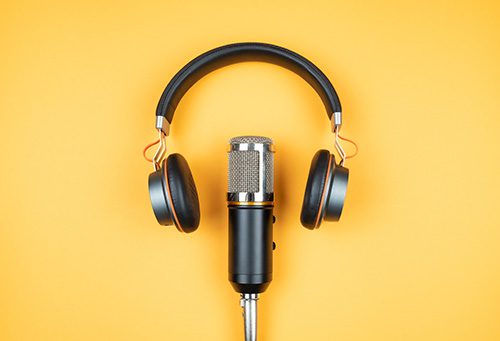
There’s a stage where your ideal clients sit still, listen for 30 to 60 minutes, and actually want to hear what you have to say. No algorithm fighting. No pay-to-play. No three-second scroll past your carefully crafted headline. It’s a podcast microphone. And most brands are still ignoring it.
If you’re a business owner or marketing leader investing in PR and SEO but you haven’t built podcast guesting into your visibility strategy, you’re leaving one of the highest-leverage channels on the table. Here’s why that needs to change — and how podcast PR fits into the broader landscape of authority, search visibility, and brand trust in 2026.
The Attention Problem You Already Know About
Let’s start with what you’re experiencing right now. Organic reach on social platforms continues to compress. Google’s AI Overviews are answering more queries without a click. Your beautifully optimized blog post might earn a featured snippet that sends zero traffic to your site. Your LinkedIn post reaches a fraction of your followers unless you’re posting multiple times a day and playing the engagement game.
The attention economy hasn’t just gotten competitive. It’s gotten extractive. Platforms take your content, serve it to their users on their terms, and give you less and less in return.
Podcast PR operates on fundamentally different physics.
When someone listens to you on a podcast, they’re opting in. They chose to press play. They’re often listening with earbuds in — while commuting, exercising, doing the dishes. You’re not competing with seventeen other tabs. You have their actual attention for an extended, uninterrupted window.
That kind of engagement doesn’t exist anywhere else at scale. And attention of that quality converts differently than impressions.
Why This Is a PR Strategy, Not Just a Marketing Tactic
Let me be specific about what I mean by podcast PR, because this isn’t about launching your own show (though that has its place). This is about strategically placing yourself or your executives as guests on established podcasts where your target audience already listens.
This is earned media. You’re being introduced by a trusted host, positioned as an expert, and given space to share your thinking in depth. That’s the definition of third-party credibility — the thing PR has always been about.
But here’s where it gets interesting in 2026: the downstream effects of a single podcast appearance now touch almost every part of your digital visibility strategy.
Backlinks
Most podcast hosts publish show notes pages with links to your site, your social profiles, and any resources you mention. These are contextually relevant, editorially placed backlinks from domains that Google can clearly categorize. For SEO, this is clean, high-quality link building that doesn’t require a single outreach email begging for a guest post slot.
Indexable content
The majority of podcasts now publish full transcripts. That’s thousands of words of keyword-rich, conversational content where your name and expertise are front and center. This content gets indexed by Google, surfaces in AI-generated overviews, and feeds the large language models that power AI search tools like Perplexity, ChatGPT search, and Gemini.
Brand entity signals
This is the one most people miss. Every podcast appearance creates a new mention of your name, your company, and your area of expertise — connected to a specific, authoritative context. Search engines and AI systems are building entity graphs. They’re mapping who is connected to what topics, who gets cited by whom, and who has consistent authority signals across the web. Podcast appearances feed that graph in exactly the ways that matter.
The AI Search Angle You Can’t Afford to Ignore
Let’s talk directly about how AI search is reshaping visibility, because this is where podcast PR becomes not just useful but strategic.
AI search systems don’t just look at your website. They synthesize information from across the web to determine who the credible voices are on a given topic. When a user asks an AI tool “Who are the leading consultants in B2B brand strategy?” or “What’s the best approach to crisis communications for startups?” — the AI is pulling from the entire web’s reference points about you.
Every podcast transcript that mentions your name in the context of your expertise is a data point. Every show notes page that describes you as an authority is a signal. Every episode title that frames you as the go-to voice on a specific topic reinforces your entity relevance.
You’re not just getting a nice PR hit. You’re training the machines to recognize you.
This is the convergence of PR and SEO that I keep coming back to with clients: the strategies that build genuine authority with human audiences are increasingly the same strategies that build visibility with AI systems. Podcast PR sits squarely at that intersection.
A Simple Framework for Doing This Well
If you’re ready to integrate podcast guesting into your PR and SEO strategy, here’s a practical framework I use:
Define your topic lanes
Pick two to three specific topics you want to be known for. Not broad categories like “marketing” — specific angles like “brand positioning during market contraction” or “how mid-market companies should think about AI adoption.” Specificity makes you bookable and memorable.
Map shows to your audience, not your ego
The best podcast for your strategy isn’t necessarily the one with the biggest download numbers. It’s the one where your ideal client or referral partner is listening. A niche B2B show with 2,000 engaged listeners in your exact market will outperform a general business show with 50,000 casual listeners every time.
Lead with value, not your bio
When pitching yourself as a guest, don’t send a resume. Send a story. What’s the counterintuitive insight you can share? What’s the real-world result you can walk through? Hosts want guests who make their show better, not guests who want free advertising.
Repurpose aggressively
One podcast episode should become five to ten additional content assets: pull quotes for social, a blog post expanding on a key point, short video clips if the show records video, an email newsletter referencing the conversation. The appearance is the seed. The repurposing is the harvest.
Track the SEO impact
Monitor new backlinks from show notes pages. Track branded search volume after appearances. Watch for your name appearing in AI-generated responses on relevant queries. This isn’t vanity metrics — it’s measuring whether you’re building the entity authority that drives long-term visibility.
The Takeaway
The brands and leaders winning visibility in 2026 aren’t just publishing content and hoping the algorithms cooperate. They’re building dense, interconnected webs of authority signals across the channels that humans trust and AI systems reference.
Podcast PR does something rare: it builds genuine trust with human listeners while simultaneously feeding the AI systems that increasingly determine who gets seen, cited, and recommended.
It’s long-form. It’s authentic. It’s earned. And it compounds.
If you’re investing in PR and SEO but podcast guesting isn’t part of the plan, you’re working harder than you need to for less than you deserve. The best stage for your brand in 2026 is probably one you haven’t stepped onto yet.
Go find the microphone!

Bill Threlkeld is president of Threlkeld Communications, Inc., a Digital PR, SEO and Content Marketing & Measurement consultancy. Built on three-plus decades experience in Public Relations and Content Marketing. Bill’s unique value is in leveraging PR to create content “clusters” and campaigns integrating a blend of Public Relations, SEO, social media, and content that can be tracked and measured for optimized performance. Bill’s experience includes: tech, musical instrument, pro audio, legal, entertainment, apps, software, cloud services, travel, telecom, and consumer packaged goods.